What should lab-tested research peptides documentation show?
The record should identify the tested sample, product and batch, analytical method, reported result, report date and document source.
Learn what lab-tested and HPLC-tested research peptide records should identify, including method details, sample references and batch context.

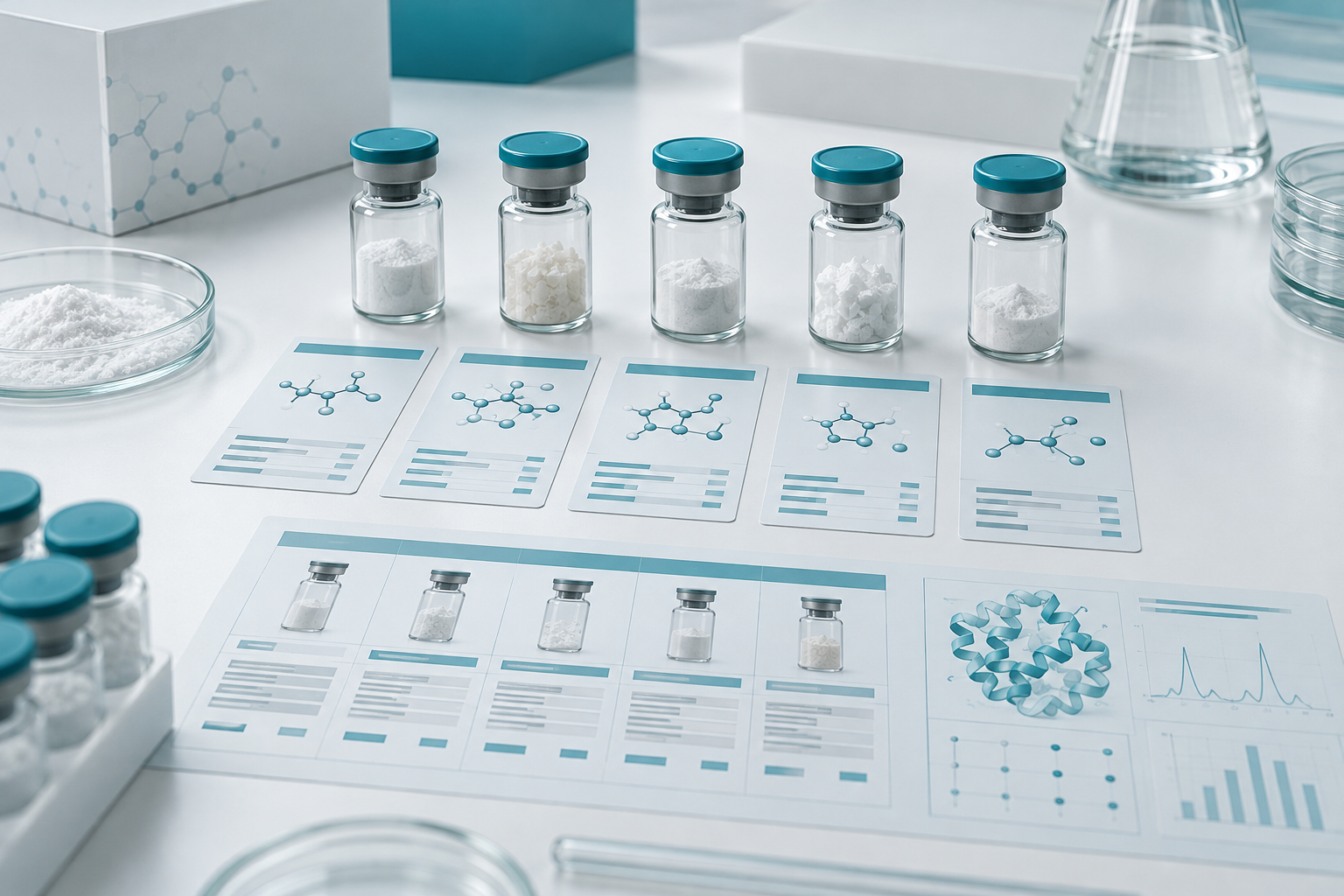
A useful laboratory testing claim identifies the analytical method, tested sample, product and batch. The phrase lab-tested research peptides by itself does not explain whether a record addresses purity, identity or another attribute.
Review checkpoint: Require the testing claim to name the method, sample and attribute being reported.
HPLC is a separation method commonly used to report the relative purity profile of a research material. Review the reported result with the method context, sample reference, product name and batch identifier.
Review checkpoint: Confirm that the chromatographic record refers to the quoted product and batch.
Ask whether the document applies to the proposed batch or only illustrates a reporting format. An example can help explain a process, but it should not be filed as evidence for a different batch.
Review checkpoint: Separate a batch result from a representative example supplied only to illustrate a reporting format.
HPLC information is one part of comparing high-quality research peptides. Pair it with identity information, packaging records, lot traceability and the receiving laboratory's own requirements rather than relying on a headline percentage.
Review checkpoint: Document HPLC, identity, packaging and receipt evidence as separate parts of the review.
Begin with the exact product and requested format. Match those details to the quotation, then check that every analytical or packaging record identifies the relevant batch. Review the method, result units and document date before recording a procurement decision.
If a detail is missing or inconsistent, pause the review and ask a specific question. A useful response should identify the product, batch and supporting record without relying on general marketing language.
The record should identify the tested sample, product and batch, analytical method, reported result, report date and document source.
Not necessarily. Lab-tested is a broad claim, while HPLC names a particular analytical technique. Ask which method was used and which attribute the result addresses.
An example can explain the reporting format, but it should be labelled clearly and should not replace the record connected to the proposed batch.
These references support the general analytical and traceability concepts in this guide. They do not certify a product or batch.
Compare the record with your laboratory's own procurement requirements, then request the relevant product and batch details.
Browse research peptide products → · Review the quality workflow → · Read the research FAQ → · Contact HelixCore →